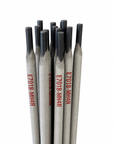
Eagle 11018 Low Hydrogen Welding Electrode (E7018 Equivalent)

Eagle 11018 Low Hydrogen Welding Electrode (E7018 Equivalent)

$121.58 CAD Sale Save
Size 10 LB (4.54 KG)
Diametre 3/32" (2.50)

Free Shipping within Canada

Adding to Cart Added to Cart

The Eagle 11018 welding electrode is a low-hydrogen stick electrode designed for high-strength, high-quality welds in structural and industrial applications. Comparable to E7018 classification rods, it provides excellent mechanical properties, smooth arc performance, and reliable results in demanding welding environments.


Understanding Low-Hydrogen Electrodes

Low-hydrogen electrodes are formulated to minimize hydrogen content in the weld, reducing the risk of cracking in high-strength steels. This makes them essential for critical applications where weld integrity is a priority.

Key advantages include:

  • Reduced risk of hydrogen-induced cracking
  • Strong, durable welds with high tensile strength
  • Suitable for structural and load-bearing applications

What Does “E7018” Mean?

E7018 classification indicates:

  • E – Electrode for stick welding (SMAW)
  • 70 – Minimum tensile strength of 70,000 PSI
  • 1 – Suitable for all welding positions
  • 8 – Low-hydrogen, iron powder coating

This classification makes it one of the most widely used electrodes in structural welding.


Applications

The Eagle 11018 electrode is ideal for:

  • Structural steel fabrication
  • Heavy equipment repair
  • Construction and infrastructure projects
  • Pressure vessels and pipelines

Its strength and reliability make it a preferred choice for professional welders.


Performance Characteristics

  • Smooth, stable arc for better control
  • Good penetration and bead appearance
  • Strong weld deposits with high integrity
  • Suitable for AC and DC welding (verify exact spec)

Storage and Handling

Low-hydrogen electrodes must be stored properly to maintain performance. Exposure to moisture can increase hydrogen levels and compromise weld quality.

Best practices include:

  • Storing in dry conditions
  • Using rod ovens when required
  • Avoiding prolonged exposure to humidity

Key Features

  • Low-hydrogen welding electrode
  • High tensile strength welds
  • Suitable for all welding positions
  • Designed for structural and industrial use
  • Comparable to E7018 classification

Technical Specifications

(You should expand this—critical for rankings)

  • Electrode Type: Low-hydrogen (E7018 equivalent)
  • Welding Process: SMAW (Stick welding)
  • Tensile Strength: ~70,000 PSI
  • Positions: All positions
  • Polarity: AC/DC (confirm exact details)

Frequently Asked Questions

What is an E7018 welding rod used for?
It is used for structural welding where strong, crack-resistant welds are required.

Why are low-hydrogen electrodes important?
They reduce the risk of hydrogen-induced cracking in high-strength steels.

Can E7018 rods be used in all positions?
Yes, they are designed for all-position welding.

Catalog

 
Eagle Farmer Welding Rod (822)
 
The Eagle Heavy Duty Repair Is A MOISTURE RESISTANT All Position Controlled Low Hydrogen Electrode For Welding Steels Sensitive To Cracking